Showing posts with label Faculty Research. Show all posts

Thursday, May 13, 2010

2010 I-CARES Research Awards Announced: Three DBBS Faculty Among Awardees

The International Center for Advanced Renewable Energy and Sustainability (I-CARES) was founded in 2007 at Washington University in St. Louis to foster research on energy, environment and sustainability that cannot be done by single investigators alone.

I-CARES nurtures collaboration within WUSTL and with regional and international partners in order to speed progress in addressing the great challenges facing our world.

As part of its mission, I-CARES awards seed funding to university faculty undertaking innovative and collaborative research in the broad areas of bioenergy and sustainability through an annual call for proposals.

The 2010 I-CARES research grants in the amount of nearly $300,000 have been awarded to 11 faculty from four schools: Arts & Sciences, the School of Engineering & Applied Science, the Sam Fox School of Design & Visual Arts and the School of Medicine.

The recipients and their research projects are:.....

2010 I-CARES research awards announced | Newsroom | Washington University in St. Louis

Friday, May 7, 2010

3 DBBS Faculty among those awarded Bear Cub Grants

Drs. Dennis Hallahan, Evan Kharasch & Linda Sandell receive support for innovative research:

Washington University has awarded five Bear Cub Fund grants totaling $165,000 to support innovative research that has shown commercial potential.

The funding will help scientists further develop their technology and take it to the proof-of-principal stage.

The grants were awarded to:

  • Patrick Crowley, PhD, associate professor of computer science and engineering;
  • Dennis Hallahan, MD, the Elizabeth H. and James S. McDonnell III Distinguished Professor in Medicine and head of the Department of Radiation Oncology;
  • Eric Leuthardt, MD, assistant professor of neurological surgery and of neurobiology;
  • John Morrisey, PhD, research professor of anesthesiology, and Evan Kharasch, MD, PhD, vice chancellor for research and the Russell and Mary Shelden Professor of Anesthesiology; and
  • Linda Sandell, PhD, the Mildred B. Simon Research Professor of Orthopaedic Surgery, and Zhepeng Wang, PhD, a scientist in her lab.

Bear Cub grants awarded to WUSTL scientists | Newsroom | Washington University in St. Louis

Tuesday, May 4, 2010

Three WUSTL biologists earn national honors

DBBS Faculty Members Tuan-hua David Ho & Ralph Quatrano, along with DBBS graduate student Ashley Galant recognized by American Society of Plant Biologists

Three Washington University in St. Louis scientists were honored this year by the American Society of Plant Biologists (ASPB), two for sustained achievement in their careers, and the third for a promising beginning.

Tuan-hua David Ho, PhD, professor of biology in Arts & Sciences, was elected president of the American Society of Plant Biologists (ASPB) for 2009-10. The ASPB, with 5,000 members, is one of the largest and most influential plant biology societies in the world.

Founded in 1924, its mission is to encourage and publish research in plant biology and to promote the interests of plant scientists. The ASPB publishes the highly cited and respected journals Plant Physiology and The Plant Cell.

Ralph S. Quatrano, PhD, the Spencer T. Olin Professor of Biology in Arts & Sciences and dean designate of the School of Engineering & Applied Science, won the Adolph E. Gude, Jr. Award, given every third year for outstanding service to the science of plant biology.

Ashley Galant, a graduate student in the lab of Joseph M. Jez, PhD, assistant professor of biology in Arts & Sciences, was awarded the Pioneer Hi-Bred graduate student fellowship. The fellowship recognizes innovative graduate research in areas of plant biology that relate to important commodity crops.....

Three WUSTL biologists earn national honors | Newsroom | Washington University in St. Louis
Monday, May 3, 2010

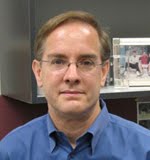
Stuart Kornfeld receives prestigious Kober Medal


Stuart A. Kornfeld, MD, the David C. and Betty Farrell Professor of Medicine, has received one of the highest awards in academic medicine, the 2010 George M. Kober Medal, from the Association of American Physicians.

Kornfeld was presented the award on April 23 during the association's annual meeting in Chicago.

"The Kober Medal has always had a special meaning to me because of the extraordinary achievements of its previous recipients," Kornfeld says. "I am deeply honored to have been selected."...

Kornfeld receives prestigious Kober Medal | Newsroom | Washington University in St. Louis

Monday, April 19, 2010

Following his instincts: Sleckman's intuition pays off in teaching, research


Barry Sleckman, MD, PhD, was a busy young entrepreneur and disaffected commuter college student when his life began taking a sudden series of unexpected turns in the late 1970s. One weekend, a close friend seeking a job with the state police urged Sleckman, now the Conan Professor and director of Laboratory and Genomic Medicine at Washington University School of Medicine, to come to the civil service exam with him to boost his morale and ease his worries. Sleckman agreed to do it, but when they arrived at the exam, Sleckman found out the only way he could go in was if he took the exam, too.
"I passed the test, the medical and physical fitness exams, the psychiatric and background checks, and, three months later, they called me back and said, ‘Congratulations, you're a member of the 95th New Jersey State Police Academy,’" he says.

Sleckman took a look at the golf-club repair business he founded at age 12 and ran from his parents' basement (with three employees) and at the busy work in college that kept cluttering up his schedule and decided that perhaps destiny was calling.

He knew he was mistaken before a year had passed. But his eight-month stint in the state police left him fascinated by the medical work he'd seen paramedics perform and wondering if he could become a doctor....

Wednesday, April 14, 2010

Checking Cancer: Longmore pursues winning goals, on and of the ice

He's Canadian, he plays hockey and he has had a brush with Olympic glory. That's Gregory D. Longmore, MD, professor of medicine in the Division of Hematology.

No, he didn't play on an Olympic hockey team. Longmore's ice time is more recreational than professional, but he once conducted scientific research that cast new light on the athletic prowess of an Olympic gold medalist.

In the early 1990s as a postdoctoral researcher at the Massachusetts Institute of Technology, Longmore found a genetic mutation in a red blood cell hormone receptor that caused mice to produce extra red blood cells. Then, while in Finland to give a scientific presentation, he met a clinician who happened to be studying an extended family with many members having high red blood cell counts.

One of them was Eero Mäntyranta, a famous Finnish athlete who won a dozen or so Olympic and world championship medals in cross-country skiing in the 1960s. Longmore's genetic discovery intrigued the clinician and a geneticist at the University of Helsinki, Finland, who decided they should look at the same gene in the skier and his kin...

READ MORE

Monday, March 22, 2010

Siteman Cancer Center receives SPORE grant to study endometrial cancer

The National Cancer Institute (NCI) has awarded the Siteman Cancer Center and Washington University School of Medicine in St. Louis a prestigious Specialized Program of Research Excellence (SPORE) grant in endometrial cancer.

Endometrial cancer, which forms in the tissue lining the uterus, is the most common gynecologic cancer. Last year, about 42,000 women were diagnosed with the disease and almost 8,000 women with endometrial cancer died.

The majority of women diagnosed with endometrial cancer are 45 years or older.

The prognosis of surviving endometrial cancer is good when the disease is detected and treated early. However, if the cancer has spread from the uterus, the chances to treat it successfully are small.

The goal of SPORE grants is to implement a strong collaboration between basic scientists and clinicians. The three-year, $1.7 million SPORE grant in endometrial cancer brings together School of Medicine experts in genomics, diagnostics and developmental therapeutics to tackle research projects that can be translated quickly into improved detection and treatment of this type of cancer. This research involves both cancer patients and populations at risk for cancer.

READ MORE

Thursday, March 11, 2010

New subtype of breast cancer responds to targeted drug


A newly identified cancer biomarker could define a new subtype of breast cancer as well as offer a potential way to treat it, say researchers at Washington University School of Medicine in St. Louis. Their findings will be published in the March 1 online early edition issue of the Proceedings of the National Academy of Sciences.

The research could further refine what recent breast cancer research has concluded: that breast cancer is not one disease, but many. So far, research has firmly established that at least five subtypes of breast cancer exist, each having distinct biological features, clinical outcomes and responses to traditional therapies.


The biomarker identified by the Washington University researchers is found frequently in breast cancers and especially in those that have poorer outcomes. It stems from overactivation of a gene called LRP6 (low-density lipoprotein receptor-related protein 6), which stimulates an important cell-growth signaling pathway. LRP6 can be inhibited by a protein discovered in the same laboratory, which could become an effective drug against the breast cancer type, the researchers say.


"We found increased expression of the LRP6 gene in about a quarter of breast cancer specimens we examined, and we think LRP6 overexpression could be a marker for a new class of breast cancer," says Guojun Bu, Ph.D., professor of pediatrics and of cell biology and physiology. "In addition, we found that this biomarker is often associated with breast cancers that are either harder to treat or more likely to recur. We already have an agent that seems to be effective against LRP6-overexpressing tumors, which could someday become a therapy for tumors that right now have few treatment options."


READ MORE

Tuesday, August 18, 2009

Ultra-tiny 'bees' target tumors


DBBS Faculty Member Samuel Wickline's Research was featured on CNN.com today. Check out the article here.

Tuesday, July 7, 2009

Mice with skin condition help scientists understand tumor growth

Cancerous tumors sometimes form at the site of chronic wounds or injury, but the reason why is not entirely clear. Now researchers at Washington University School of Medicine in St. Louis have engineered mice with a persistent wound-like skin condition, and the mice are helping them understand the tumor-promoting effects of long-standing wounds and injuries.

"The chronic skin condition in the mice led to the growth of skin tumors," says Raphael Kopan, Ph.D., professor of developmental biology and of dermatology. "And what we learned from this process fit very well with the emerging realization that a tumor's surroundings play a critical role in its development."

Past clinical evidence has linked chronic skin wounds such as leg ulcers to an increased risk of skin cancer, and some scientists have suggested that chronic injury can predispose various organs to cancer.

Read More...

Thursday, December 11, 2008

Danforth Foundation donates $10 million for neurodegenerative research

The Danforth Foundation has granted the Hope Center for Neurological Disorders at the School of Medicine a $10 million endowed gift for research into a range of conditions that cause injury and impairment to the brain and central nervous system.
The funds will be used to support innovative and groundbreaking new ideas for research with clear potential to improve diagnosis and treatment of patients with amyotrophic lateral sclerosis (ALS), Parkinson's disease, stroke, Huntington's disease, multiple sclerosis, cerebral palsy and other disorders.
The endowment created by the gift will be named for the late Donald Danforth Jr., a 1955 graduate of the Olin Business School who was executive vice president of Ralston-Purina Co. Danforth was the brother of Chancellor Emeritus William H. Danforth, M.D., former U.S. Senator John Danforth and St. Louisan Dorothy Danforth Miller.
WUSTL and Hope Happens have committed to raising additional matching endowed funds of $10 million for the same research programs over the next five years. The Hope Center was created in 2004 as a partnership between WUSTL and Hope Happens, a public charity started by Christopher Hobler, who lost his life to ALS in 2005.
"This gift is an outstanding example of how Washington University, Hope Happens and the St. Louis community continue to benefit from the generosity and leadership of the Danforths and the Danforth Foundation," Chancellor Mark S. Wrighton said. "As science develops a new generation of treatments for some of society's most devastating disorders, this donation and the mandate for additional fundraising that comes with it help ensure that Washington University and the Hope Center remain at the forefront of the field in research that will alleviate suffering and find solutions for earlier diagnosis and treatment."
"The support of the Danforth family has been at the center of so much that is good at Washington University," said Mark P. Goldberg, M.D., professor of neurology, of neurobiology and of biomedical engineering and director of the Hope Center. "In particular, the family has been enthusiastic supporters of the Hope Center since its beginning. This new gift will be incredibly helpful in advancing one of our primary missions: funding innovative new directions in diagnosis and treatment of neurological disorders."
"As a physician, William Danforth knows what an important front these terrible conditions present in the battle for improved health and longevity," said Larry J. Shapiro, M.D., executive vice chancellor of medical affairs and dean of the School of Medicine. "The Danforth Foundation's generous new gift recognizes the bench-to-bedside research model we've fostered here at the School of Medicine through our BioMed 21 program as one of the best hopes for new treatments and cures for these disorders."
"This gift in honor of my brother, Don, means a lot to the family," said William H. Danforth, who is a member of the foundation board. "We all have great hopes that the discoveries of the wonderful scientific leaders of the Hope Center will help halt and prevent ALS and similar devastating diseases."
The Hope Center helps support the studies of more than 70 faculty and 500 scientists with shared research facilities and annual distribution of seed grants.

Monday, November 10, 2008

Washington University scientists first to sequence genome of cancer patient (Acute Myelogenous Luekemia Cells)

For the first time, scientists have decoded the complete DNA of a cancer patient and traced her disease - acute myelogenous leukemia - to its genetic roots. A large research team at the Genome Sequencing Center and the Siteman Cancer Center at Washington University School of Medicine in St. Louis and Barnes-Jewish Hospital sequenced the genome of the patient - a woman in her 50s who ultimately died of her disease - and the genome of her leukemia cells, to identify genetic changes unique to her cancer.